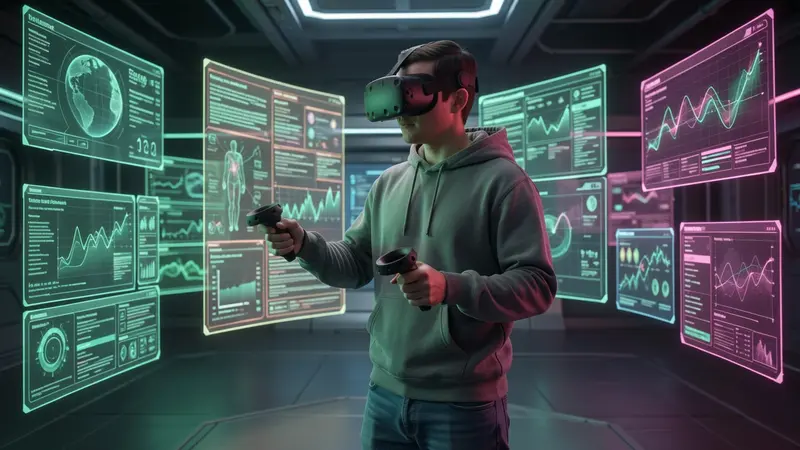
Technology doesn’t just advance games—it also safeguards their history. This article explores how TechView TheGameArchives combines tools, preservation standards, and community knowledge to protect gaming heritage while supporting research and discovery. I’ll break down the architecture of an effective archival system, explain metadata and search, and show how enthusiasts, scholars, and developers can collaborate to keep interactive media accessible and meaningful.
Why Game Archives Matter
Cultural memory in interactive media
Games are more than entertainment—they are cultural artifacts reflecting design philosophies, societal norms, and technological innovation. Without intentional preservation, we risk losing playable records, source code, and metadata that explain why certain mechanics or platforms were significant.
Fragility of digital formats
Unlike printed books, games depend on evolving hardware, software, and networks. Bit rot, DRM, and proprietary formats create challenges. Proper archiving requires strategies for file integrity, emulation, and documentation so that titles remain playable for decades.
The TechView Approach
A layered preservation model
TechView TheGameArchives can be viewed as a multi-layered system:
-
Base layer: storage and redundancy
-
Middle layer: emulation and runtime compatibility
-
Top layer: discovery, context, and research
This separation ensures long-term durability while allowing interfaces and research tools to evolve.
Open standards and practical tools
Whenever possible, TechView uses open formats like PNG, FLAC, JSON, and YAML, along with widely supported emulators. Proprietary formats are preserved in containers with clear documentation, enabling future migration and accessibility.
Architecture of a Modern Game Archive
Storage, integrity, and versioning
-
Content-addressed storage with checksums (e.g., SHA-256) ensures files remain unaltered.
-
Redundant, geographically distributed copies reduce risks of data loss.
-
Versioning preserves patches, localization variants, and developer builds without overwriting history.
Emulation and execution
-
Emulator catalogs are aligned with platform generations and verified for compatibility.
-
Containerized runtimes (like OCI images) include emulator versions, BIOS notes, and configurations.
-
For online games, proxy servers simulate legacy services, enabling partial restoration when full functionality is impossible.
Legal and ethical guidelines
-
Rights tracking ensures proper ownership, license management, and access terms.
-
Access tiers differentiate between public previews, research-only collections, and restricted zones for sensitive content.
-
Takedown and review workflows balance preservation with creator rights.
Metadata: The Heart of Discovery
Descriptive, technical, and contextual layers
-
Descriptive: title, release date, region, platform, genre, tags
-
Technical: file hashes, ROM/ISO lineage, build IDs, engine versions
-
Contextual: interviews, design documents, patch notes, reviews, and contemporary press
Controlled vocabularies and ontologies
Consistent tags—covering input methods, monetization, and accessibility—enable cross-era comparisons. Even a small ontology allows queries like “split-screen platformers on sixth-gen consoles with co-op and haptic feedback.
Search and retrieval
-
Faceted search for platform, year, region, genre, and developer makes filtering easy.
-
Semantic indexing supports natural-language queries, such as “early rhythm games with peripherals.”
-
Result ranking favors complete, verified, and context-rich entries.
Persistent identifiers
Every asset—games, builds, manuals, and box art—receives a permanent ID, supporting stable citations for academic work and cross-repository collaboration.
Community and Collaboration
Contributor pipelines
-
Submission portals with checksum validation prevent duplicates.
-
Moderation queues maintain quality without discouraging contributions.
-
Credit systems recognize contributions from dumpers, scanners, translators, and reviewers.
Partnerships with institutions
Libraries, museums, and universities provide archival rigor, while fan communities contribute breadth and speed. Agreements define shared standards and digitization priorities.
Access and Experience
Layered access modes
-
Web previews: curated screenshots, manuals, and metadata for casual browsing
-
Research workspaces: authenticated sandboxes for emulation, notes, and citations
-
Exhibition mode: kiosk-friendly builds for galleries and events with input mapping and auto-save
Preservation-aware UX
The interface highlights provenance, checksum badges, and “context cards” explaining quirks like regional censorship, missing servers, or input limitations.
Risk Management and Sustainability
Threat modeling
-
Technical: hardware failure, data corruption, emulator issues
-
Organizational: funding gaps, volunteer turnover, policy changes
-
Legal: copyright evolution, platform holder restrictions
Funding strategies
Grants, memberships, and sponsorships diversify income. Transparent roadmaps and impact dashboards demonstrate how funds improve access and preservation.
Research and Education Use Cases
For scholars
Analyze genre trends, engine evolution, and monetization strategies. Metadata allows comparison of mechanics diffusion or localization patterns across regions.
For developers
Study historical design patterns, benchmark performance, and understand constraints that shaped past innovation.
For educators
Integrate playable case studies, primary sources, and course modules on game history, UI evolution, and preservation ethics.
Roadmap: Building TechView TheGameArchives
Near-term priorities
-
Finalize metadata schemas and controlled vocabularies
-
Establish legal review playbooks and takedown procedures
-
Expand emulator compatibility matrices and testing
Mid-term goals
-
Launch contributor tools for ingestion, duplicate detection, and crediting
-
Deploy research sandboxes with persistent IDs and citation support
-
Pilot partnerships with a museum and a university archive
Long-term vision
Create a federated network of archives sharing schemas, identifiers, and replication. Preservation becomes a resilient, community-owned utility.
Getting Involved
-
Archivists: refine standards, QA metadata, and build preservation workflows
-
Developers: contribute emulator patches, tools, and container manifests
-
Researchers propose queries and test ontology coverage
-
Fans: scan materials, verify dumps, and record oral histories
Final Thoughts
TechView TheGameArchives acts as a bridge—connecting players and scholars, past hardware and modern systems, hobbyist passion and institutional excellence. Through open standards, careful legal stewardship, and community-driven efforts, gaming’s history remains playable today and for decades to come.