Welcome to our guide on how bucket elevators work. Our team here at RUD Australia has worked with mining, cement, and construction facilities across the country. We design and supply vertical conveying systems that hold up under tough conditions.
In this article, we’ll cover
- How bucket elevators move bulk materials
- Belt systems vs chain systems
- The main types of bucket elevators
- Where they’re used in industry
- Common problems and how to prevent them
Read on to find out what works best for your operation.
How Bucket Elevators Move Bulk Materials
Bucket elevators move bulk materials by scooping them into buckets at the boot, carrying them upward on a belt or chain, and discharging them at the head section.
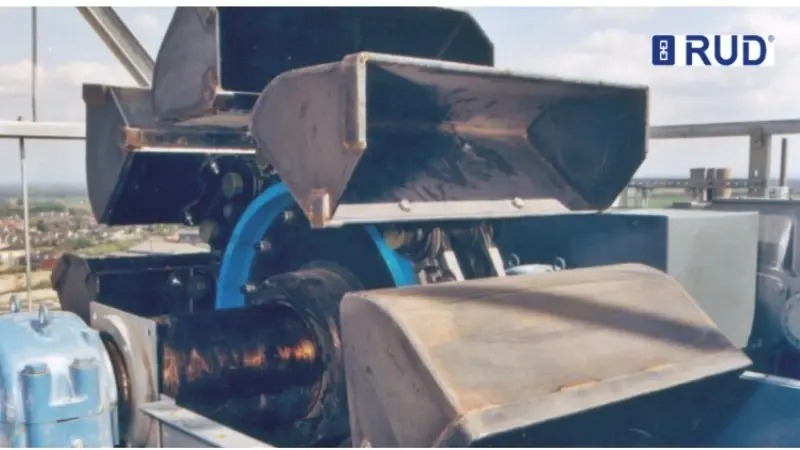
The process begins as the buckets rotate around the lower pulley in the boot section and fill them with material. The belt or chain then lifts the loaded buckets vertically through an enclosed casing before they discharge at the top (that’s the basic idea). Once the buckets reach the top, they round the head pulley and tip forward. At that point, the material either gets flung out by centrifugal force or pours out by gravity, depending on the system type. Then, it drops into a discharge chute and flows to the next stage, like a silo, processing line, or storage bin. The whole cycle repeats continuously. And since the system runs in a closed loop, it can lift large volumes of product with little manual input. That makes bucket elevators a practical choice for vertical transport in facilities where space is tight, but throughput needs to stay high.
What Are the Components of a Bucket Elevator?
A bucket elevator consists of five main components: the boot section, head section, buckets, belt or chain, and drive assembly. These parts determine how efficiently the system runs and how long it holds up under daily use.
Here’s a description of all five elements of a bucket elevator:
- Boot Section: This is the loading point at the bottom of the elevator. Buckets pass through it and scoop up bulk materials from a hopper, feeder, or pile before heading upward.
- Head Section: You’ll find that at the top, buckets tip over the head pulley and release their load. Material then drops into discharge chutes or flows directly into silos for storage.
- Buckets: Steel or plastic containers carry material upward through the system. Steel handles abrasive or heavy products better, while plastic suits lighter or corrosive materials.
- Belt or Chain: The driven loop moves buckets between the boot and head continuously. Belts run with almost no sound and suit lighter loads, but chains handle heavier or hotter materials.
- Drive Assembly: A motor and pulley system powers the vertical movement. It controls speed and keeps the belt or chain running at a consistent pace throughout operation.
In combination, these parts establish a controlled and contained vertical transfer process.
What Is the Difference Between Belt and Chain Systems?
The difference between belt and chain bucket elevator systems comes down to material type, operating conditions, durability requirements, and cost structure.
Here’s a quick comparison chart to help you understand the differences better:
| Feature | Belt System | Chain System |
| Best For | Light to moderate, fine, non-abrasive materials | Heavy, coarse, abrasive, or high-temperature materials |
| Operating Speed | Higher speeds | Moderate speeds |
| Noise Level | Quieter | Louder |
| Upfront Cost | Lower | Higher |
| Temperature Resistance | Limited (rubber belts can degrade under heat) | Handles higher temperatures effectively |
| Abrasion Resistance | Moderate (wears faster in harsh conditions) | High (better suited for abrasive environments) |
| Typical Industries | Grain handling, powders, dry bulk processing | Mining, cement, clinker, mineral processing |
People choose belt elevators mainly for lighter-duty applications, where lower cost, higher speed, and reduced noise are priorities (especially in smaller plants). Meanwhile, chain systems are engineered for demanding industrial environments. They offer greater resistance to abrasion, impact, and heat. They’re also more likely to last longer in mining, cement, and heavy bulk material operations. However, for mining or cement production, the chain is usually the safer long-term bet.
Pro tip: Review the material’s moisture content, since sticky products can affect discharge efficiency in both systems.
What Are the Main Types of Bucket Elevators?
The main types of bucket elevators are centrifugal discharge, continuous discharge, positive discharge, and central chain elevators. All of them handle materials differently, so picking the right type depends on what you’re moving and how delicate it is.
Below is a breakdown of how each type of bucket elevator operates:
- Centrifugal Discharge: The high speed of this kind of elevator flings material out at the head section using centrifugal force. They’re the first choice for free-flowing products like grain, sand, or pellets. Simply put, it’s fast and efficient, but not ideal for anything fragile.
- Continuous Discharge: They have a slower setup that allows for the gentle handling of breakable or abrasive products. Specifically, buckets travel closer together in this type and pour material over the back of the preceding bucket during discharge.
- Positive Discharge: Buckets mechanically tip to release their load with extra care, with positive-discharge elevators. You’ll mostly find them in food processing, where delicate items like confectionery or snack foods would break apart under centrifugal force.
- Central Chain Elevators: When you’re moving hot or abrasive materials in tough environments, central chain elevators use strong chains to handle the load. For instance, since conditions become harsher in cement plants or mines, this design delivers more dependable performance than other options.
Keep in mind that you’ll get the best performance out of your bucket elevator when you can match its type with your application.
Where Are Bucket Elevators Used?
Bucket elevators are used in mining, cement production, construction, and other industries that handle bulk materials vertically. Their flexibility suits a variety of tough environments and material types. In particular, they work best when you don’t have much floor space. We’ll explain the applications of bucket elevators below.
Mining and Minerals Processing
It’s important to use the right equipment when you’re moving large volumes of abrasive ore. That’s why mining operations rely heavily on chain bucket elevators. These systems move coal, ore, and crushed rock from ground level to processing areas or storage bins. For example, in places like the Pilbara or Bowen Basin, you’ll find them running around the clock. And in terms of system types, chain elevators handle abrasive materials with less wear over time. Their hardened steel links stand up to constant grinding, which would damage belts much faster.
Cement and Construction
Did you know that cement plants depend heavily on vertical conveying systems? The production process demands constant movement of materials between stages. That’s where bucket elevators lift clinker, limestone, and raw powder from crushers to kilns and storage silos. Plus, you can use several of these elevators at a single plant simultaneously, each feeding a different part of the process. Construction material manufacturers also use them to lift sand and aggregates when floor space is tight. At the same time, they keep output high by moving material vertically instead of taking up more ground space.
Pro tip: In remote mining regions, stock spare parts on-site to avoid extended production losses.
What Are Common Bucket Elevator Problems?
Common bucket elevator problems include belt slippage, bucket damage, material spillage, and boot section blockages. Even well-built systems can develop these issues without proper maintenance and operation.
Let’s break down what is behind each of these problems:
- Belt or Chain Slippage: Improper tension or misalignment of pulleys and sprockets causes this issue. When the belt slips, material doesn’t reach the discharge point properly, and productivity drops.
- Bucket Damage: You get worn or cracked buckets from overloading or handling abrasive materials over time. Damaged buckets spill product and put extra strain on the drive system.
- Material Spillage: Excessive speed, overfilling, or the wrong bucket design leads to product escaping before discharge. It creates waste and can cause the accumulation inside the casing.
- Boot Section Blockages: Buildup occurs when material accumulates faster than buckets can carry it away. If you leave it unchecked, blockages will put stress on the entire system and can cause sudden shutdowns.
We strongly recommend performing inspections regularly and having a clear maintenance schedule. Check the tension, look for signs of wear, and remove buildup early to keep the system running properly and extend the life of your equipment.
Getting the Most From Your Bucket Elevator
Bucket elevators move bulk materials upward simply and efficiently. The right setup depends on what you’re handling, how fast it needs to move, and the conditions on site. For example, moving abrasive ore in a mine isn’t the same as lifting fine powder in a cement plant. Chain systems handle tougher, heavy-duty work, while belt systems suit lighter materials and usually come at a lower cost. If you’re planning a new installation or need to upgrade what you’ve got, RUD Australia can help. Get in touch with us, and let’s talk through your project.